The Art of Deshedding: Elevating Your Grooming Salon's Essential Service
Master advanced deshedding techniques to improve coat health, reduce shedding, and enhance client satisfaction in your Hong Kong grooming salon.
The Art of Deshedding: Elevating Your Grooming Salon's Essential Service
Deshedding is more than just a routine brush-out; it's a critical service that significantly impacts a pet's comfort, coat health, and a client's home environment. For grooming professionals in Hong Kong, mastering advanced deshedding techniques can differentiate your salon, improve client satisfaction, and open doors to premium service offerings. Let's delve into how to elevate this fundamental skill.
Understanding Coat Types and Shedding Cycles
Effective deshedding begins with understanding the diverse world of canine and feline coats. Double-coated breeds like Huskies, Golden Retrievers, and Pomeranians shed profusely, often "blowing their coat" seasonally. Short-coated breeds such as Labradors and Pugs shed year-round. Each coat type requires a tailored approach. Identifying the specific shedding cycle and coat condition of each pet is paramount before beginning any deshedding treatment.
The Right Tools for the Job
Investing in a comprehensive range of deshedding tools is crucial. While a standard slicker brush and comb are basics, consider adding:
- Undercoat Rakes: Excellent for breaking up mats and removing dead undercoat from thick, dense coats without cutting the guard hairs.
- Shedding Blades (Loop or Bar): Best used on short-coated breeds to pull out loose hairs. Use with caution to avoid skin irritation.
- Specialized Deshedding Brushes: Tools like the Furminator or similar brands are effective for many coat types, designed to reach deep into the undercoat.
- High-Velocity Dryers: A powerful tool for "blowing out" loose undercoat after a bath, significantly reducing manual brushing time and effectiveness.
Remember, tool selection should always be based on the pet's coat type, condition, and comfort level.
Optimizing the Deshedding Process
A structured deshedding process yields the best results:
- Pre-Bath Brushing: Remove as much loose fur and any superficial tangles as possible before wetting the coat. This prevents mats from tightening.
- Specialized Bathing: Use a high-quality deshedding shampoo and conditioner. These products often contain ingredients that help loosen dead hair and moisturize the skin, making removal easier. Allow the conditioner to sit for the recommended time.
- Thorough Rinsing: Ensure all shampoo and conditioner are completely rinsed out to prevent skin irritation or residue buildup.
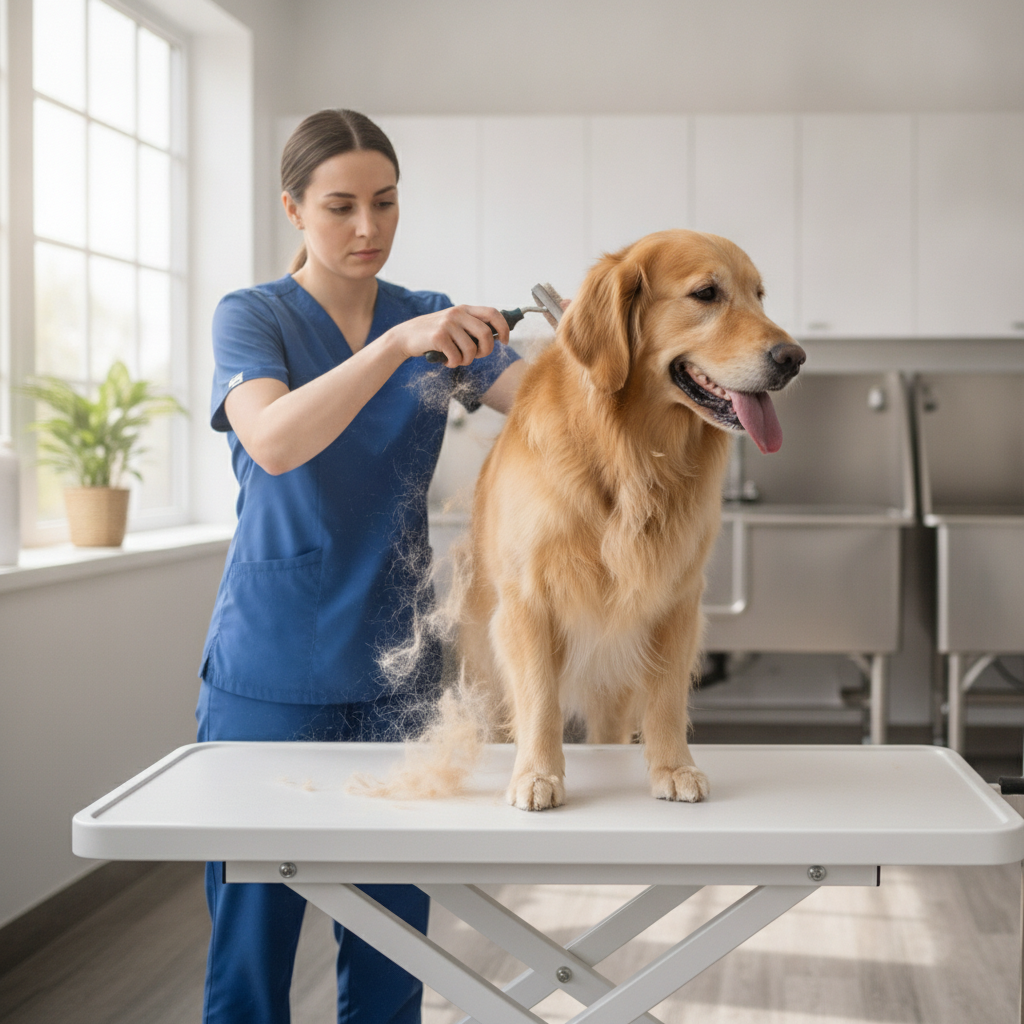
- High-Velocity Drying: This is arguably the most effective step. Systematically "blast" the coat with a high-velocity dryer. The force of the air helps separate the coat and expels loose undercoat, often revealing astonishing amounts of shed fur. Work in sections, drying down to the skin.
- Post-Bath Brushing/Combing: Once completely dry, use your chosen deshedding tools to comb through the coat, removing any remaining loose hairs. Finish with a fine-toothed comb to ensure no tangles remain.
Client Education and Aftercare
Educating clients about the benefits of professional deshedding and proper home care is vital. Explain how regular deshedding reduces allergens, prevents matting, and promotes a healthier coat. Recommend specific brushes or combs for home use and advise on frequency based on their pet's shedding cycle. By demonstrating your expertise and providing valuable advice, you build trust and encourage repeat business.
Mastering deshedding transforms it from a chore into an art, positioning your salon as a leader in comprehensive pet care. This dedication to skill not only benefits the pets but also strengthens your salon's reputation and client loyalty.
#Pet Grooming #Deshedding #Coat Care #Grooming Techniques #Salon Services