Beyond the Visible: Ensuring Chemical and Biosecurity Safety in Your Grooming Salon
Learn essential strategies for maintaining chemical and biosecurity safety in your pet grooming salon to protect pets, staff, and your business.
Beyond the Visible: Ensuring Chemical and Biosecurity Safety in Your Grooming Salon
In the pet grooming industry, we often focus on the comfort of our animal clients and the artistry of our grooming techniques. However, many potential hazards within a salon are not immediately visible. Chemical and biosecurity risks can have serious consequences for pets, staff, and your business's reputation. Establishing comprehensive safety protocols is therefore paramount to maintaining a healthy and secure environment.
Chemical Safety: More Than Just Cleaning Products
Your grooming salon utilizes a variety of chemicals daily, from shampoos and conditioners to disinfectants and cleaning agents. Improper handling and storage can lead to skin irritation, respiratory issues, and even more severe injuries.
Proper Storage and Labeling
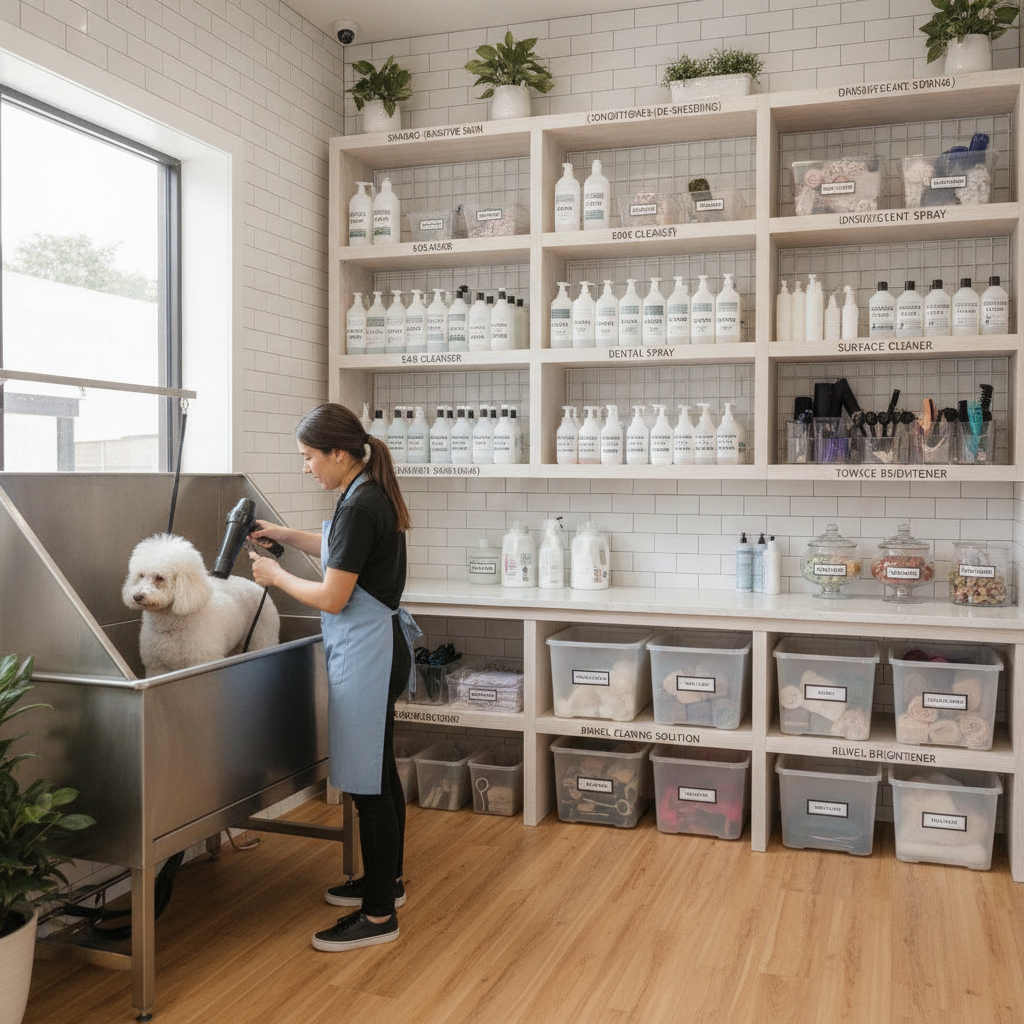
- Keep all chemicals, including shampoos, conditioners, disinfectants, and cleaning agents, in their original, clearly labeled containers. Never transfer chemicals to unlabeled or repurposed containers.
- Store them in secure, well-ventilated areas, away from pets and food/drink. Use child-proof locks or restrict access if they are within easy reach of staff without direct supervision.
- Never mix chemicals unless explicitly instructed by the manufacturer, as this can create dangerous reactions or toxic fumes.
Dilution and Application
- Always follow the manufacturer's instructions for dilution ratios precisely. Over-concentrating or under-diluting can compromise effectiveness or increase risks.
- Ensure adequate ventilation during use, especially with strong or volatile products. Take care to protect the pet's eyes and ears from chemical exposure.
- Train staff on the proper use of Personal Protective Equipment (PPE), such as gloves and eye protection, particularly when handling concentrated chemicals or during cleaning and disinfection tasks.
Emergency Protocols
- Have an eyewash station or emergency shower readily available in your salon to address accidental chemical splashes to the eyes or skin.
- Know where the Safety Data Sheets (SDS) are for all chemicals used in your salon, and ensure all staff members are trained on how to access and understand them.
- Establish clear procedures for accidental exposure or ingestion, including first aid steps and contact information for emergency services.
Biosecurity: Preventing the Spread of Pathogens
Pet grooming salons are places where various animals frequent, leading to a higher risk of pathogen transmission (e.g., bacteria, viruses, fungi). Effective biosecurity measures protect all pets from cross-contamination.
Sterilization and Disinfection Protocols
- Implement strict routines for cleaning and disinfecting all tools (clippers, scissors, brushes, nail trimmers, etc.) between *every* pet. Consider having multiple sets of tools to allow for proper disinfection time.
- Use veterinary-grade disinfectants that are effective against bacteria, viruses, and fungi. Always adhere to the product's specified contact times to ensure efficacy.
- Regularly clean and disinfect all surfaces: tubs, grooming tables, floors, kennels, and waiting areas, especially those frequently touched by pets.
Waste Management
- Properly dispose of pet hair, soiled towels, and other waste in sealed bins that are emptied frequently to prevent pathogen spread and pest attraction.
- For potentially biohazardous waste (e.g., dressings with blood or bodily fluids), follow appropriate medical waste disposal guidelines.
Hand Hygiene
- All staff members should practice frequent hand washing, especially between handling different pets, after cleaning tasks, and before breaks. Wash thoroughly with soap and water for at least 20 seconds.
- Provide hand sanitizer stations as a supplementary measure in areas where running water is not readily available.
Quarantine and Health Checks
- Encourage clients to disclose any recent illnesses, parasite infestations, or exposure to sick animals when booking appointments.
- Conduct a quick visual check upon a pet's arrival for any signs of contagious illness, such as coughing, nasal discharge, skin issues, or unusual behavior.
- Have a protocol for isolating pets showing signs of contagious illness and advise clients to seek veterinary attention rather than proceeding with grooming.
Integrating these unseen hazards into your daily operations not only protects your furry clients and valuable staff but also enhances your salon's professional image and client trust. Proactively managing these risks is key to ensuring the long-term success of your business.
#Pet Safety #Salon Hygiene #Chemical Safety #Biosecurity #Grooming Risks